

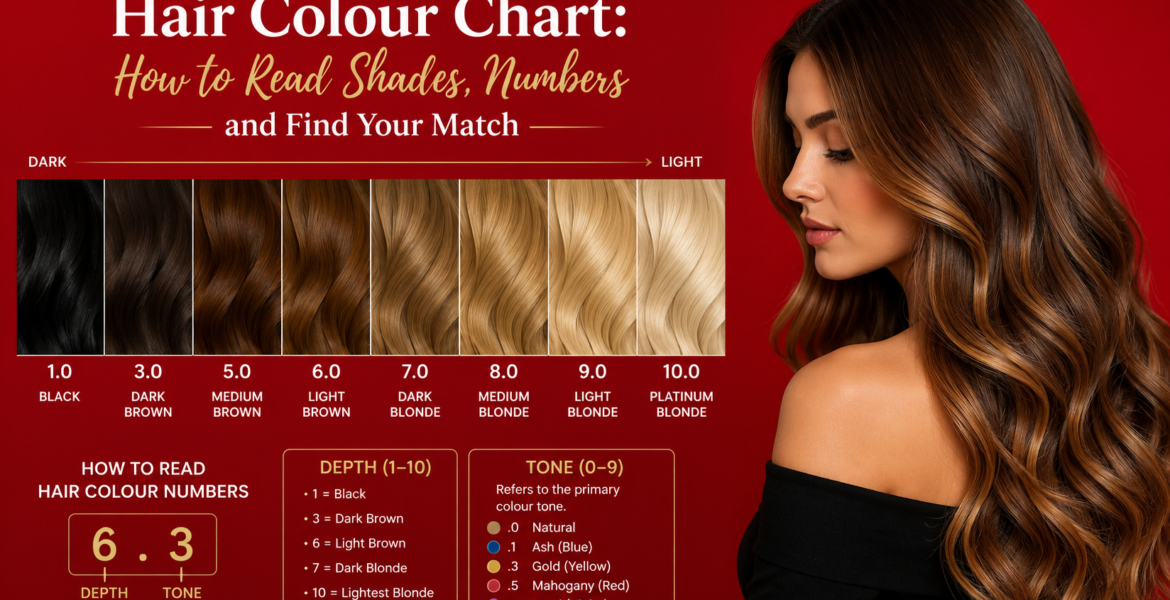
Hair Colour Chart: How to Read Shades, Numbers and Find Your Match
Standing in front of a hair colour chart can feel oddly overwhelming. Rows of numbers sit beside shade names that all look fairly similar. Most charts follow the same basic logic once you know what to look for. This guide breaks down how hair colour charts actually work, what those numbers mean, and how to use one to choose a shade that suits you.
How Hair Colour Charts Are Structured?
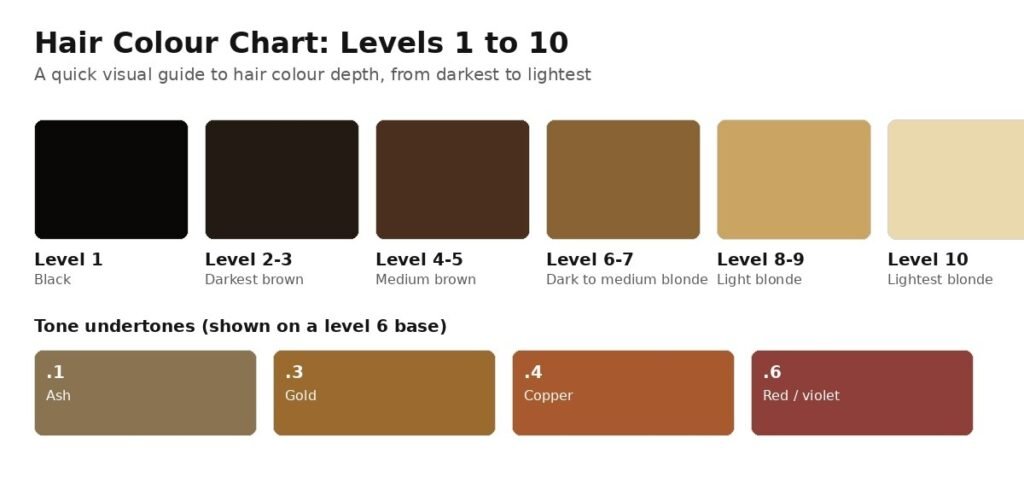
Most professional and at home hair colour charts use a numbering system based on depth and tone. The first number, usually from 1 to 10, indicates depth. Lower numbers mean darker shades, and higher numbers mean lighter ones. A second number, often after a decimal point or dot, indicates tone, the underlying warmth or coolness of the colour.
| Level | Shade Depth | Typical Description |
|---|---|---|
| 1 | Black | Deepest, darkest shade |
| 2 to 3 | Darkest Brown | Very dark, minimal warmth |
| 4 to 5 | Medium Brown | Natural brunette range |
| 6 to 7 | Dark to Medium Blonde | Transitional shades |
| 8 to 9 | Light Blonde | Noticeably lighter, more lift needed |
| 10 | Lightest Blonde | Platinum or near platinum |
What the Tone Numbers Mean
Tone numbers describe the undertone within a shade, separate from how light or dark it is. These typically follow a fairly consistent pattern across most brands.
- .0 usually indicates a natural, neutral tone
- .1 indicates ash or cool tones, often used to counteract brassiness
- .3 indicates gold or warm tones
- .4 indicates copper or warm red tones
- .6 indicates red or violet based tones
A shade labelled 6.1, for example, is a dark blonde with cool, ash undertones. A shade labelled 6.4 is the same depth, but with warm, copper undertones instead.
How to Choose a Hair Colour Based on Skin Tone
Skin undertone plays a big role in how a hair colour actually looks once applied, often more than the shade name alone suggests.
Warm undertones (skin with golden or peachy hints) tend to suit warmer hair shades, honey blonde, caramel, chestnut brown, or golden tones. Cool, ashy shades can sometimes look slightly at odds against warm skin.
Cool undertones (skin with pink or blue hints) generally suit cooler shades better, ash blonde, cool brown, or blue black tones. Very warm, golden colours can sometimes overwhelm cooler skin.
Neutral undertones have the most flexibility, since both warm and cool shades tend to sit well. This is often the easiest starting point for anyone unsure which direction to go.
Reading a Chart Correctly Before Colouring
A few practical points make chart reading far easier in person, not just in theory.
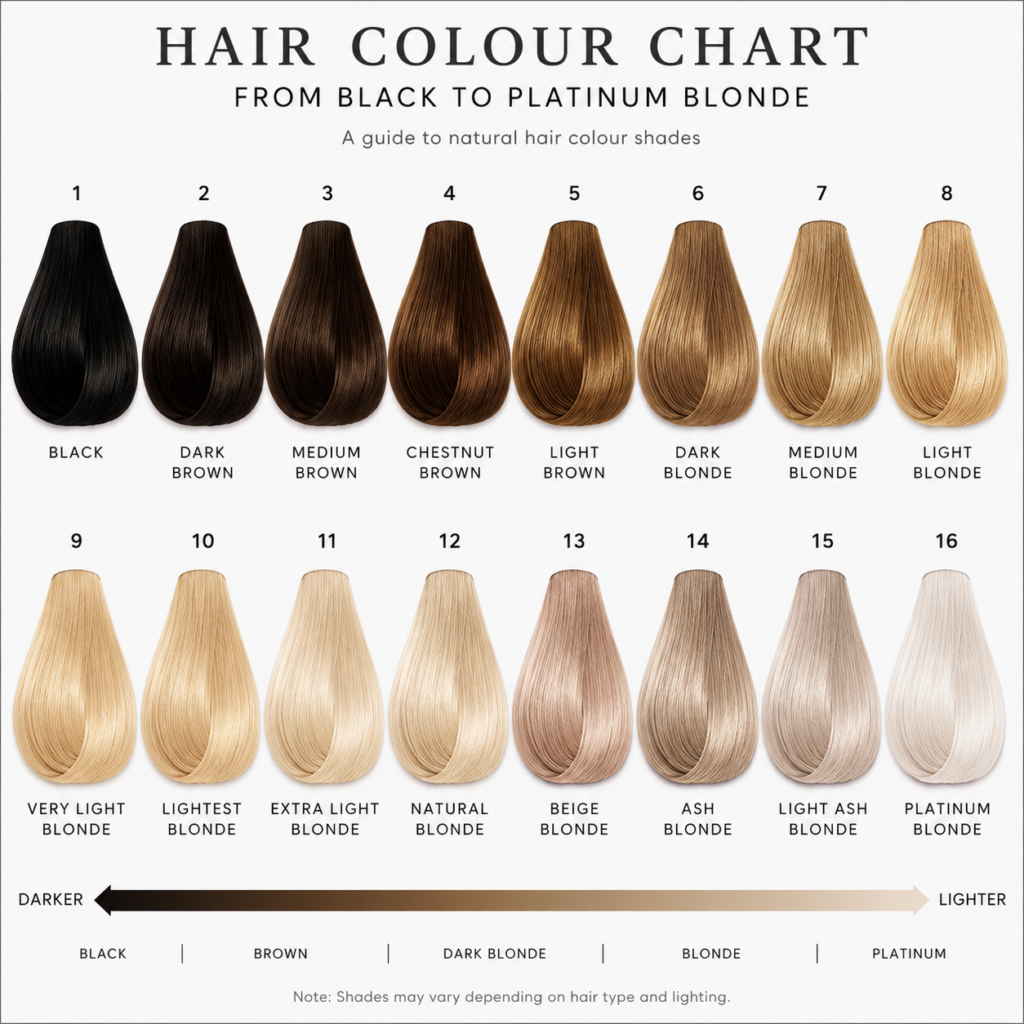
Chart swatches are usually shown against a neutral, artificial background, so the actual colour on natural hair can look slightly different once applied, particularly if the hair has previous colour, greys, or varying porosity. Always check the base level required, since going more than a few levels lighter than your natural shade in one session usually needs lightening or bleaching first, not just a single dye application. If in doubt, a strand test on a small, hidden section of hair gives the most accurate preview before committing to a full application.
Common Hair Colour Chart Mistakes to Avoid
Choosing a shade based purely on the box photo, rather than checking the actual level and tone numbers, is one of the most common reasons results do not match expectations. Ignoring your natural level is another frequent issue, since the same product number can look different depending on your starting shade. Skipping a strand test before a big colour change is also worth avoiding, since it is the simplest way to catch an unexpected result before it affects your whole head of hair.

#Comment
Curly Hair Extensions: The Complete Guide to Choosing and Wearing Them - Allvestyle
[…] more easily than lightened. For a clearer sense of how hair colour levels and undertones work, our hair colour chart guide breaks down exactly how to read shade numbers before you […]