

What Is Glass Skin? How to Get It, Including L’Oréal’s Take
Glass skin describes a complexion so smooth, hydrated and even it appears to reflect light, almost like glass. The term originated in Korean beauty culture and has since become one of the most searched skincare goals worldwide, popularised further by the “glazed” dewy look several celebrities have made fashionable in recent years. Unlike a filter or a one-time glow, it is built through consistent hydration and skin barrier care, not heavy coverage products. This guide covers exactly how to get glass skin using a proper routine, including how L’Oréal’s own product fits in.
What Does Glass Skin Actually Mean?
Glass skin is not a specific product or a single step. It describes skin that is intensely hydrated, smooth in texture, and free of visible pores, redness or dullness. The look relies on healthy skin function more than makeup. Dehydrated or irritated skin cannot reflect light evenly, no matter how much product sits on top. Achieving it means addressing hydration, exfoliation and barrier health together, not focusing on one product alone. It is also worth saying plainly that this look is achievable for most skin types, though oily skin generally suits lightweight, gel-based hydration, while drier skin may need richer creams for the same plump finish.
The Core Principles Behind Glass Skin
A few consistent factors separate genuine glass skin results from a temporary, surface-level glow.
Deep hydration. Skin needs water content at a cellular level, not just a surface layer of moisturiser. Ingredients like hyaluronic acid draw moisture into the skin rather than sitting on top.
Gentle, regular exfoliation. Removing dead skin cells allows light to reflect more evenly across the surface. Over exfoliating can damage the skin barrier, so frequency matters more than intensity.
A strong skin barrier. Skin that is irritated, dry or compromised cannot hold moisture effectively. Barrier repairing ingredients, such as ceramides and niacinamide, help skin retain hydration throughout the day.
Consistency over time. Glass skin builds up over a sustained routine. Most people notice a visible difference after three to four weeks of consistent use, though barrier repair can take longer if skin was previously compromised. It is not an overnight transformation from a single product.
Key Ingredients to Look For
Since so much of the effect comes down to formulation rather than a specific brand, it helps to know what to check for on an ingredients list.
| Ingredient | What It Does | Where It Fits in a Routine |
|---|---|---|
| Hyaluronic Acid | Draws and holds water in the skin | Serum, applied to damp skin |
| Niacinamide | Supports the skin barrier and evens tone | Serum or moisturiser |
| Ceramides | Reinforces the skin’s protective barrier | Moisturiser |
| Glycerin | A humectant that attracts moisture | Serum, toner or moisturiser |
| Centella Asiatica (Cica) | Soothes and calms irritated skin | Toner, essence or mask |
| Squalane | Lightweight oil that seals in hydration | Final step, morning or night |
None of these ingredients need to come from an expensive product. The core principles behind glass skin, hydration, gentle exfoliation and barrier support, can be achieved with affordable options, as long as the routine stays consistent.
A Simple Routine for Getting Glass Skin
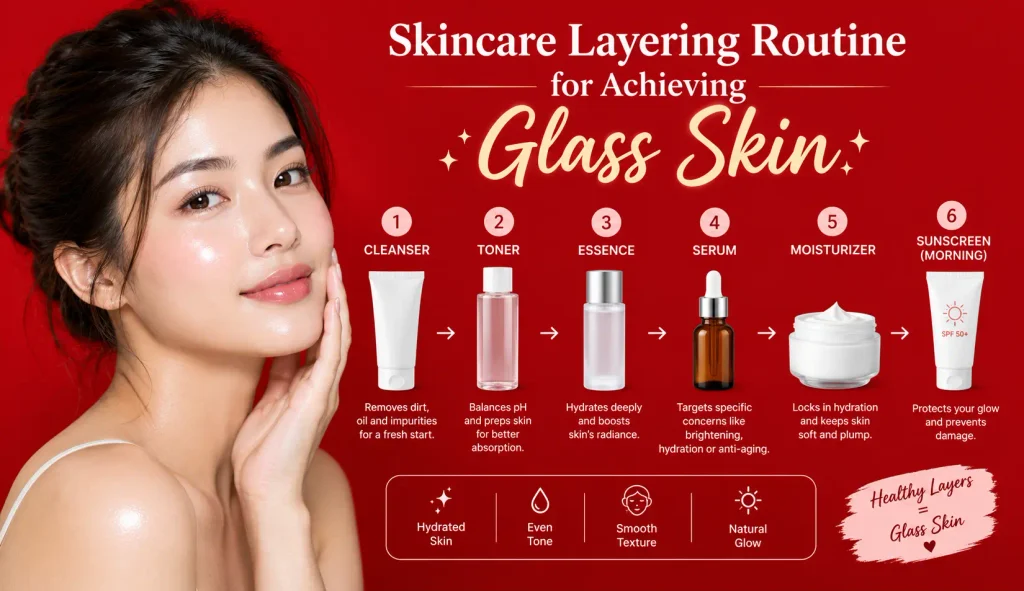
- Cleanse gently. A double cleanse, an oil based cleanser followed by a water based one, removes makeup and impurities without stripping the skin.
- Exfoliate two to three times a week. A mild chemical exfoliant, such as a low percentage AHA or BHA, works more evenly than a scrub.
- Tone to prep the skin. A hydrating, alcohol free toner rebalances the skin after cleansing and helps the next steps absorb more effectively, rather than sitting on the surface.
- Apply a hydrating serum. Look for hyaluronic acid or glycerin. Both pull moisture into the skin’s surface layers.
- Lock hydration in with a moisturiser. This step matters more than people expect. Serum alone can evaporate without a moisturiser sealing it in.
- Use sunscreen every morning. UV damage is one of the fastest ways to undo hydration and evenness. This step protects the rest of the routine.
How L’Oréal’s Glass Skin Liquid Cream Fits In
L’Oréal has released a moisturiser built specifically around this trend, the Revitalift Filler L’Oréal Glass Skin Liquid Cream. It is described as a hybrid between a serum and a cream. The aim is lightweight hydration without a heavy or sticky finish. According to L’Oréal, the formula uses both macro and micro hyaluronic acid alongside niacinamide, aiming to plump and hydrate skin while supporting the barrier.
For anyone following a glass skin routine, a product like this typically works as the final moisturising step. It applies after a hydrating serum, locking in hydration rather than replacing earlier steps. It reflects a wider shift in the trend, from long, multi step Korean beauty routines towards fewer, more concentrated products aiming for a similar result with less effort.
Common Mistakes That Prevent Glass Skin Results
Skipping moisturiser because skin already feels hydrated is one of the most common mistakes. Serums alone generally cannot seal in hydration. Over exfoliating in pursuit of smoother texture often backfires. It damages the skin barrier and causes redness rather than the intended glow. Expecting instant results is another common issue. Genuine improvement in hydration and texture typically takes several weeks to become visible, not overnight.
