

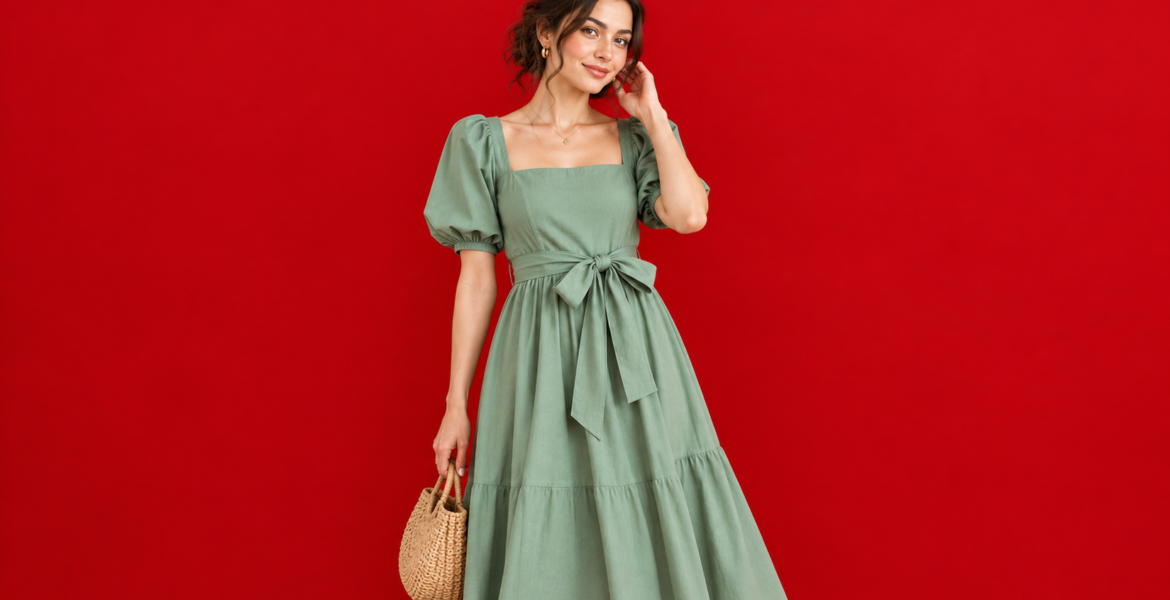
What Is a Tie Waist Dress? Styles and How to Wear One
A tie waist dress uses a fabric sash or belt, tied by hand, to shape the waist rather than relying on a fixed seam or elastic. That single detail makes it one of the most adaptable dresses in a wardrobe. The same dress can be tied high for an elongated look, cinched tight for definition, or left loose for something more relaxed. This guide covers what actually defines a tie waist dress, how it differs from a wrap dress, and how to style one well.
What Defines a Tie Waist Dress
The defining feature is the tie itself, a strip of the same fabric, or occasionally a contrasting one, that wraps around the waist and fastens in a bow or knot. Unlike a dress with a fixed waist seam, the tie gives you control over fit. You decide how snug it sits and where.
Tie waist dresses come in nearly every silhouette. A-line, shirt dress, wrap style and shift dresses can all include a waist tie. The tie is simply an added detail, not a silhouette on its own, which is part of why it shows up across so many different dress styles.
Tie Waist Dress vs Wrap Dress: They Are Not the Same Thing
These two terms get confused often, partly because many wrap dresses also happen to tie at the waist. The distinction is worth knowing before you shop for either.
A wrap dress closes by one side of the bodice crossing over the other, usually secured with the same waist tie. The wrap itself is what holds the whole dress closed. A tie waist dress does not necessarily wrap at all. The main body of the dress can close with buttons, a zip or simply be sewn shut, while the tie exists purely to cinch the waist over the top.
In practice, every wrap dress uses a tie at the waist, but not every tie waist dress wraps. If a dress opens down the front and needs the tie to stay closed, it is a wrap dress. If the dress is already a finished garment and the tie is there to shape the waist, it is best described as a tie waist dress.
How Tie Placement Changes the Look
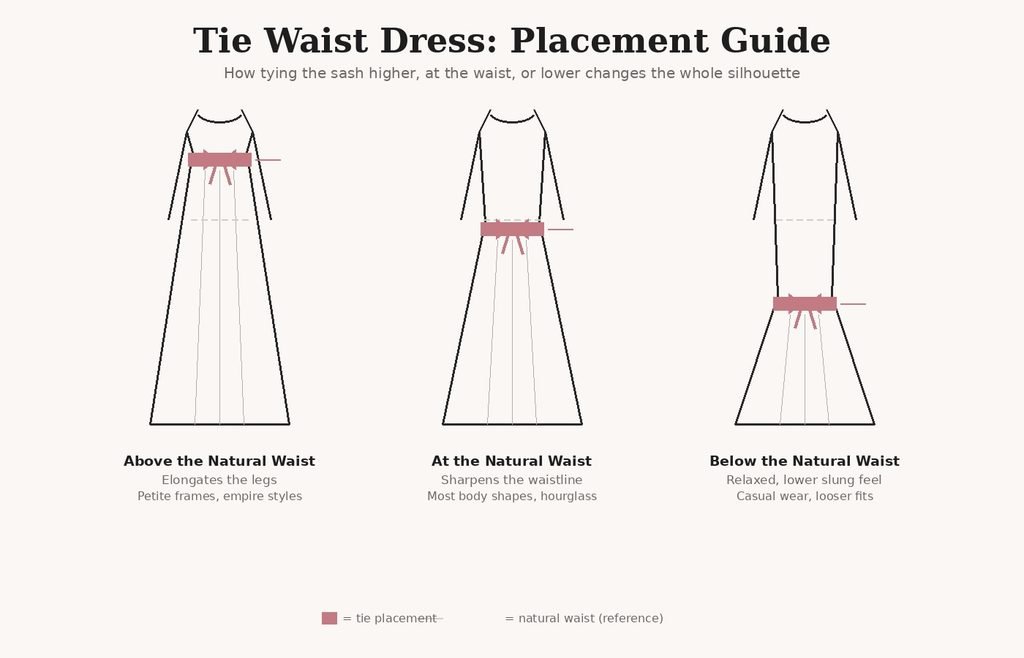
Where you tie the sash changes the entire effect of the dress, sometimes more than the dress itself.
| Tie Placement | Effect | Best For |
|---|---|---|
| Above the natural waist | Elongates the legs, softens the middle | Petite frames, empire style dresses |
| At the natural waist | Sharpens the waistline, classic proportion | Most body shapes, hourglass frames |
| Below the natural waist | Relaxed, lower slung feel | Casual wear, looser silhouettes |
The knot itself also changes the mood. A front bow reads classic and a little romantic. A side knot feels more considered and works well for smart or evening settings. Tying the sash at the back, where it is barely visible, keeps the front of the dress clean and minimal.
Who Suits a Tie Waist Dress
The tie makes this one of the more forgiving styles to fit well. The waist is adjustable rather than fixed.
Straight or athletic frames often like tying it firmly at the natural waist, since this creates definition that a straight cut alone would not. Hourglass shapes usually find the natural waist placement the most flattering too, since it echoes their existing proportions rather than fighting them.
For a fuller midsection, a looser tie sitting slightly off centre tends to sit more comfortably than a tight, centred knot. Pear shapes often prefer the tie sitting a touch higher than the natural waist, which keeps attention on the smaller upper body rather than the hip.
Trying different tie positions in front of a mirror is the fastest way to find what works. The same dress can look genuinely different depending on where and how snugly it is tied.
How to Style a Tie Waist Dress
Casual. Pair a cotton or linen tie waist dress with flat sandals or trainers. Tie the sash a little looser for an easy, unstructured feel, and keep the rest of the outfit simple.
Smart. Cinch the tie firmly at the natural waist and add block heels or loafers. A blazer over the top works well, particularly with a structured fabric like poplin or twill.
Evening. Choose a tie waist dress in satin, crepe or silk. A side or back knot looks more polished than a front bow for formal settings. Heeled sandals and minimal jewellery let the shape of the dress do the work. If the event calls for stricter guidance, our guide to semi formal attire covers what most invitations actually expect.
Choosing the Right Fabric
Fabric affects how well a tie holds its shape through the day. Cotton, poplin and linen hold a knot cleanly and suit daytime wear. Softer fabrics like viscose or crepe drape beautifully but can need retying more often, since the tie has less grip. Silk and satin look the most elevated for evening, though the tie may need a firmer double knot to stay put.
A tie waist dress in a heavier fabric, such as denim or a structured cotton blend, holds a defined silhouette well. It can feel bulky if the tie is knotted too thickly. Thinner, longer sashes generally sit flatter under the knot.
Caring for a Tie Waist Dress
A few small habits keep a tie waist dress looking sharp for longer. Untie the sash fully before washing, since a knotted tie can crease permanently or wash unevenly. A cold, gentle cycle protects both the fabric and the tie itself. Air drying is usually safer than a tumble dryer for anything with delicate ties or embellishment. Storing the dress on a hanger, rather than folded, also helps it keep its shape between wears.
Common Tie Waist Dress Mistakes
- Tying too tightly in the same spot every time. Moving the placement slightly can completely change how the dress fits and flatters.
- Choosing a fabric that will not hold a knot. Very slippery or heavy fabrics can leave the tie loosening throughout the day.
- Washing the dress with the tie still knotted. This often leaves a permanent crease across the fabric.
- Assuming a tie waist dress and a wrap dress are interchangeable. Check how the dress actually closes before buying, especially if freedom of movement matters for the occasion.
